Are Brazilian Cities Prepared for an Aging Population?
Brazil is aging rapidly, but urban infrastructure still presents obstacles that make independence and quality of life more difficult for older adults.
An uneven sidewalk, a bus with high steps, or the absence of a bench to rest on during a walk may seem like minor inconveniences to people without mobility difficulties. For millions of older Brazilians, however, these situations are part of everyday life and can limit activities as simple as going to the supermarket, visiting friends, or attending a medical appointment.
Brazil’s population is aging at a pace that requires changes in how cities are organized. According to the Brazilian Institute of Geography and Statistics (IBGE), the country had approximately 32.1 million people aged 60 and over in 2022, representing 15.6% of the population. In 2010, this group accounted for 10.8%.
This demographic transformation raises an important question for policymakers, urban planners, and society as a whole: are Brazilian cities keeping up with the needs of an increasingly older population?
Brazil Is Aging Faster Than It May Seem
Data from the 2022 Census show that the population aged 65 and over grew by 57.4% between 2010 and 2022, rising from 14.1 million to 22.2 million people. During the same period, the share of children aged 14 and under fell from 24.1% to 19.8% of the population.
This shift is changing the country’s infrastructure, transportation, healthcare, and housing needs. A city designed primarily for younger adults and car travel may create difficulties for residents who need safer and more accessible environments to carry out daily activities.
The challenge also affects families. As more people reach old age, environments that support independent living become increasingly important, reducing the need for constant assistance with everyday tasks.
Sidewalks and Transportation Can Determine Independence
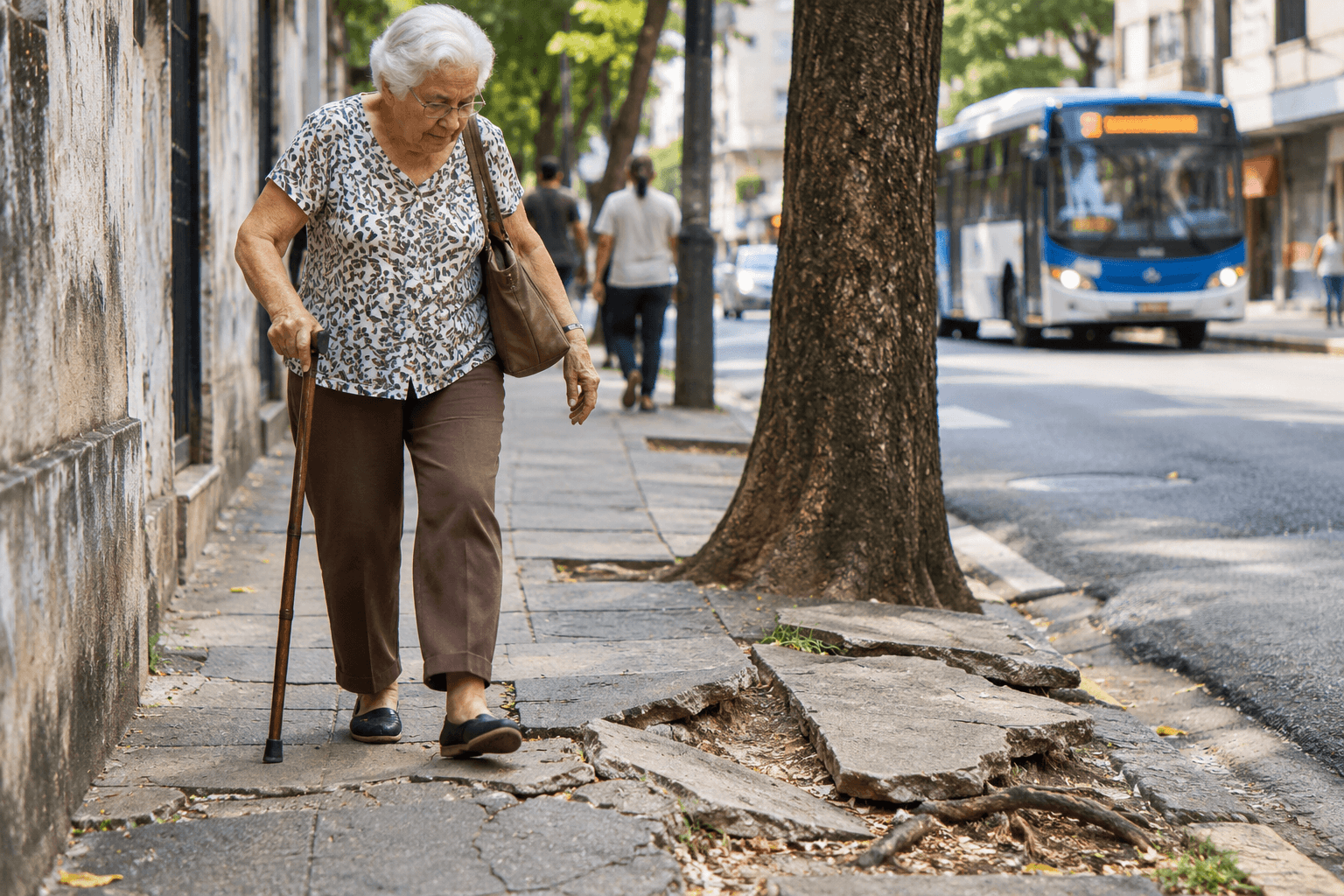
In many Brazilian cities, walking requires constant attention. Potholes, uneven pavement, utility poles placed in the middle of sidewalks, and a lack of accessibility ramps make it difficult for people with reduced mobility to get around.
These obstacles increase the risk of falls, especially among older adults experiencing changes in balance, vision, or muscle strength.
A report published by Jornal da USP in November 2024 highlighted that falls account for approximately 10% of hospital emergencies involving older adults. Beyond physical injuries, these accidents can lead to a loss of independence and the need for long-term care.
Public transportation must also adapt to these changes. Accessible buses, bus stops with seating, readable information, and pedestrian crossings with sufficient crossing time all make travel easier and help older adults remain active participants in society.
Suitable Housing Is Also Part of Healthy Aging
Adapting cities to an aging population begins inside people’s homes. Staircases without handrails, slippery floors, bathrooms without grab bars, and insufficient lighting can turn ordinary activities into safety hazards.
However, accessibility does not depend solely on individual home improvements. Housing location, proximity to healthcare services, pharmacies, grocery stores, and public spaces also influence quality of life.
When an older person must travel long distances to meet basic needs, their independence may be compromised, particularly when suitable transportation is unavailable.
In an analysis published by Jornal da USP in May 2026, physician and professor Paulo Saldiva emphasized the importance of integrating urban planning with public health policies. The approach includes improvements in transportation, housing, public spaces, and access to green areas.
Public Spaces Help Reduce Social Isolation
Squares, parks, and community centers play an important role in the lives of older adults. These places provide opportunities for physical activity, social interaction, and community participation.
When public spaces are safe and accessible, they become valuable options for people who want to maintain an active lifestyle without relying exclusively on private facilities.
Conversely, neighborhoods with few gathering places, heavy traffic, and poor pedestrian infrastructure can limit opportunities for social interaction.
Isolation can become particularly concerning when people stop leaving their homes because they fear falling or cannot find suitable conditions for getting around.
For this reason, accessibility improvements benefit not only older adults but also people with disabilities, pregnant women, children, and residents experiencing temporary mobility limitations.
What Needs to Change in Brazilian Cities?
Preparing for an aging population requires coordinated action across different areas of public administration. Improving sidewalks, expanding public transportation accessibility, adapting public spaces, and making essential services easier to reach are among the necessary measures.
It is also important to recognize the differences between Brazilian municipalities. Large urban centers face challenges related to traffic, high-density development, and long travel distances, while smaller cities may struggle to provide adequate transportation and specialized services.
Urban planning must account for these differences and include older residents in identifying the problems that affect their daily lives.
The growth of the older population is not a distant possibility. It is a demographic transformation already documented by Brazilian statistics, and one that will continue to shape how people live, work, and move around.
Preparing cities for this reality means enabling more Brazilians to maintain their independence as they age. Aging is part of everyone’s life, and the conditions provided by urban environments can make a significant difference in that experience.
Sources
Brazilian Institute of Geography and Statistics (IBGE). 2022 Demographic Census: Population by Age and Sex. https://www.gov.br/secom/pt-br/acompanhe-a-secom/noticias/2023/10/censo-2022-numero-de-idosos-na-populacao-do-pais-cresceu-57-4-em-12-anos
Jornal da USP, May 4, 2026. Cities Need to Adapt to an Aging Population. https://jornal.usp.br/radio-usp/cidades-precisam-se-adaptar-ao-envelhecimento-da-populacao/
Jornal da USP, November 26, 2024. Falls Among Older Adults Account for 10% of Hospital Emergencies. https://jornal.usp.br/atualidades/queda-de-idosos-e-responsavel-por-10-das-emergencias-hospitalares/